
2025 New 300-420 Dumps - Real Cisco Exam Questions
Dependable 300-420 Exam Dumps to Become Cisco Certified
NEW QUESTION # 140
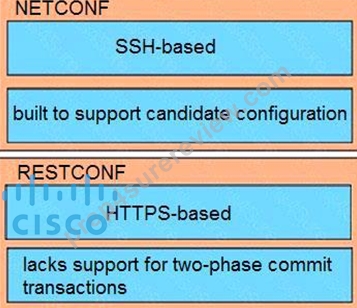
Drag and drop the properties from the left onto the protocols they describe on the right.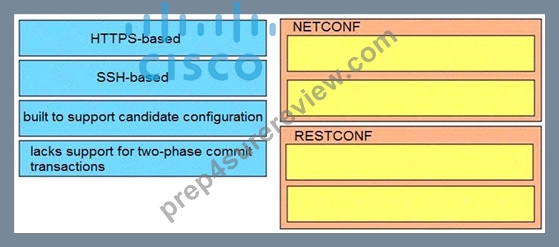
Answer:
Explanation: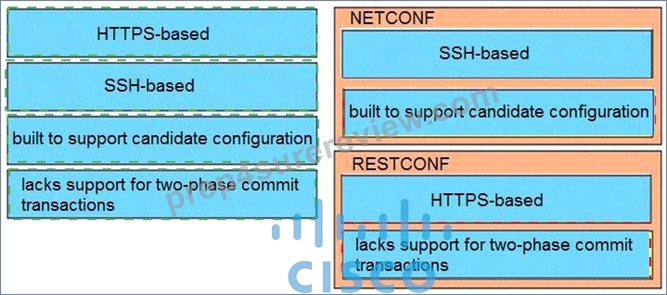
NEW QUESTION # 141
Which control-plane technology allows the same subnet to exist across multiple network locations?
- A. FabricPath
- B. ISE mobility services
- C. LISP
- D. VXLAN
Answer: C
Explanation:
VXLAN is a data plane technology - LISP is control plane related.
https://www.cisco.com/c/en/us/td/docs/solutions/CVD/Campus/cisco-sda-design-guide.html
NEW QUESTION # 142
Which are two advantages of a "one switch at a time" approach to integrating SD-Access into an existing brown field environment? (Choose two.)
- A. involves the least risk of all approaches
- B. ideal for protecting recent investments while upgrading legacy hardware
- C. allows simplified testing prior to cutover
- D. opens up many new design and deployment opportunities
- E. allows simplified roll back
- F. appropriate for campus and remote site environments
Answer: B,F
NEW QUESTION # 143
Drag and drop the characteristics from the left onto the correct telemetry mode on the right.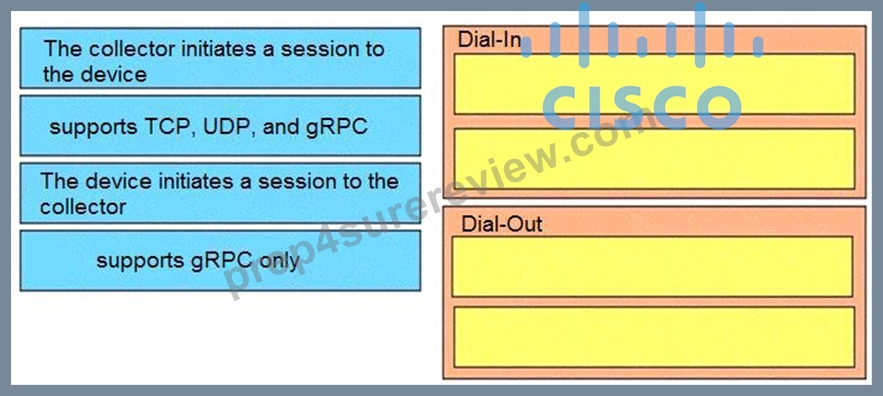
Answer:
Explanation: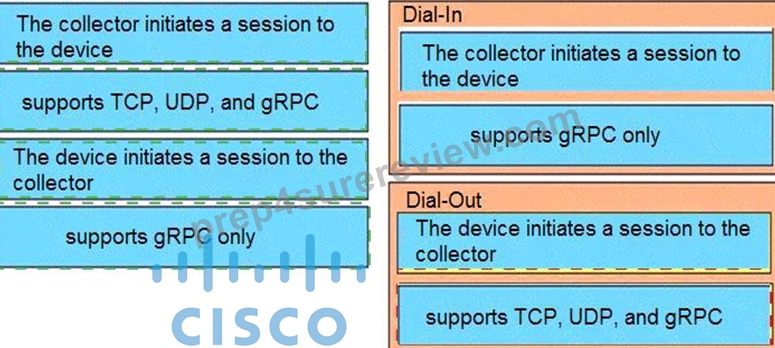
Explanation: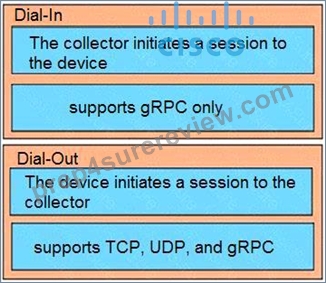
In a dial-in mode, the destination initiates a session to the router and subscribes to data to be streamed. Dialin mode is supported over gRPC in only 64-bit platforms In a dial-out mode, the router initiates a session to the destinations based on the subscription. All 64-bit IOS XR platforms (except for NCS 6000 series routers) support gRPC and TCP protocols. All 32-bit IOS XR platforms support only TCP.
NEW QUESTION # 144
Refer to the exhibit.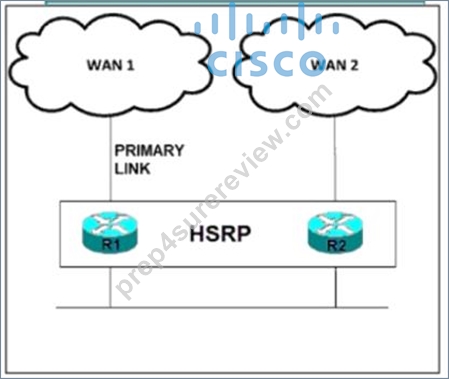
Refer to the exhibit. An engineer must design an automatic failover solution. The solution should allow HSRP to detect a WAN 1 failure and initiate an automatic failover, making router R2 the active HSRP router. Which two solutions should the engineer choose? (Choose two.)
- A. use a floating static route
- B. Implement Enhanced Object Tracking on router R1
- C. Implement PBR on router R1
- D. Implement IP SLA on router R1
- E. use IP source routing
Answer: B,D
NEW QUESTION # 145
Drag and drop the description from the left onto the corresponding WAN connectivity types and categories on the right.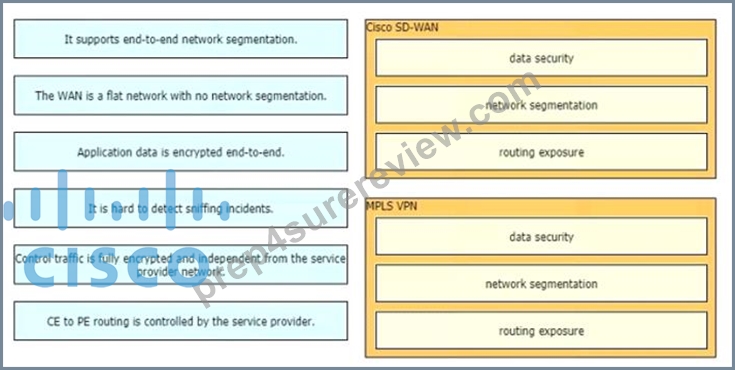
Answer:
Explanation: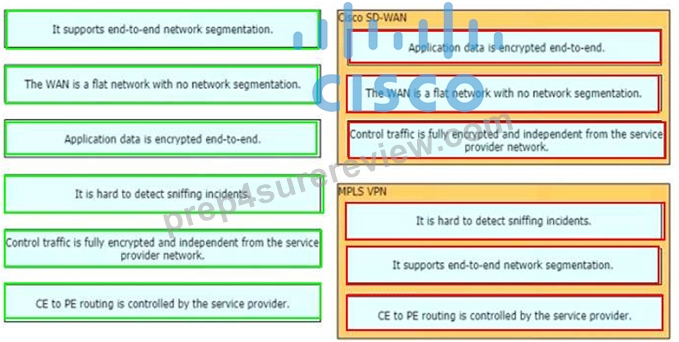
NEW QUESTION # 146
Drag and drop the model-driven telemetry considerations from the left onto the modes they apply to on the right.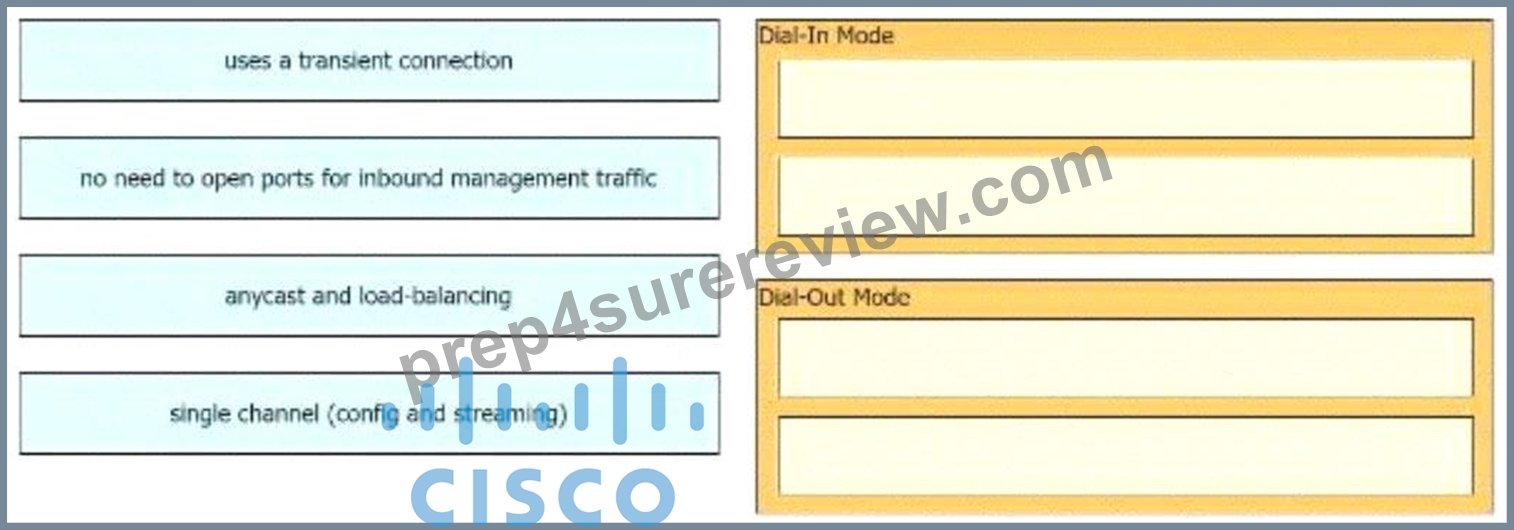
Answer:
Explanation: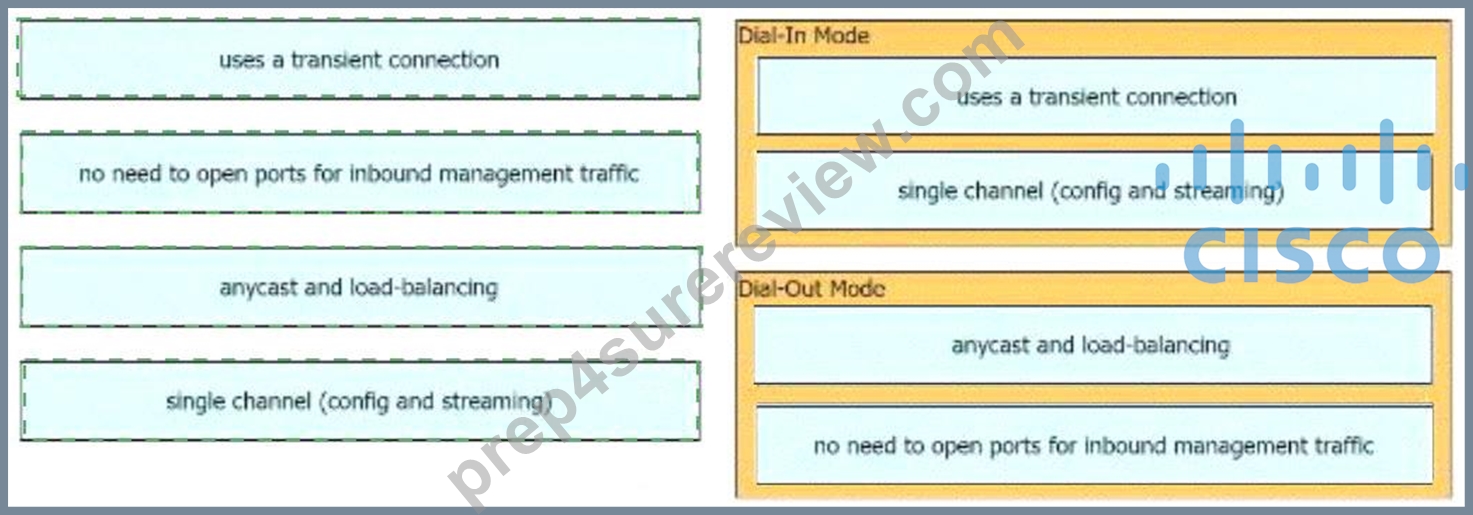
Explanation: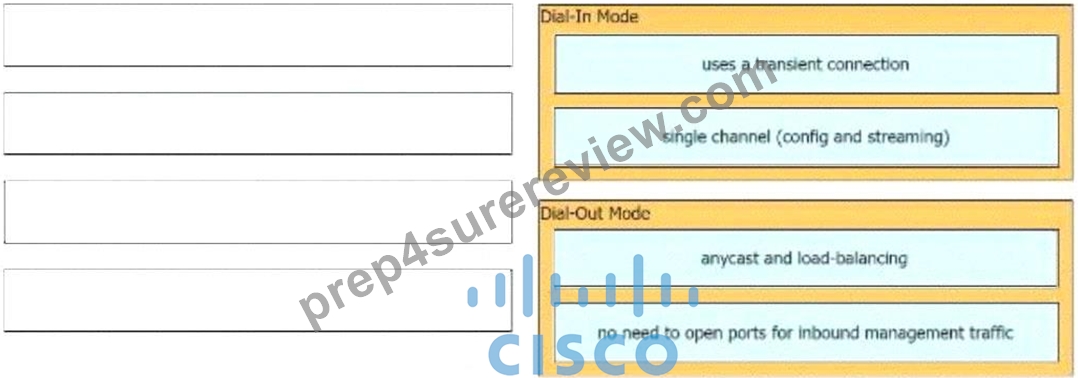
https://xrdocs.io/telemetry/blogs/2017-01-20-model-driven-telemetry-dial-in-or-dial-out/
NEW QUESTION # 147 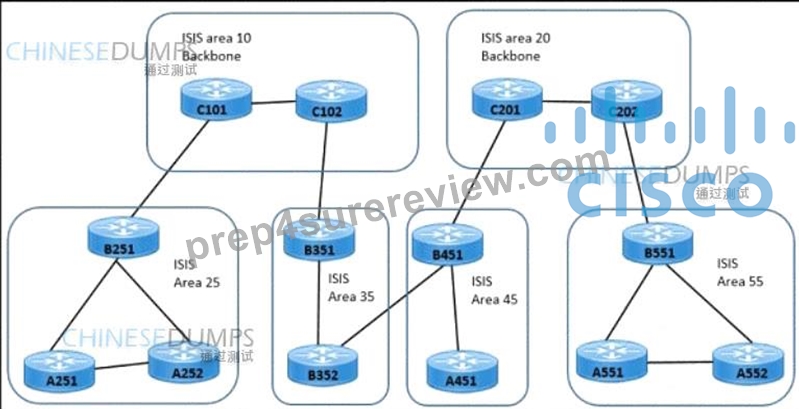
Refer to the exhibit An engineer is designing a hierarchical ISIS solution for an enterprise customer with these requirements
* Users in areas 25 and 55 send and receive traffic from both backbone areas
* Link flaps in areas 35 and 45 must not impact other areas
* Routers will double within the next 12 months in areas 35 and 45
Which design must the engineer select?
- A. A series routers Level 1.2 B series routers Level 1/2 and C series routers Level 1/2
- B. A series routers Level 1/2 B series routers Level 2 and C series routers Level 2
- C. A series routers Level 1. B series routers Level 1/2. and C series routers Level 2
- D. A series routers Level 2, B series routers Level 2, and C series routers Level 1
Answer: C
NEW QUESTION # 148
What is a benefit of using VRRPv3 as compared to VRRPv2?
- A. VRRPv3 supports stateful switchover
- B. VRRPv3 supports IPv4 and IPv6
- C. VRRPv3 supports preemption
- D. VRRPv3 supports authentication
Answer: B
Explanation:
https://www.cisco.com/c/en/us/td/docs/ios-xml/ios/ipapp_fhrp/configuration/15-e/fhp-15-e- book/VRRPv3-Protocol-Support.html
NEW QUESTION # 149
Refer to the exhibit.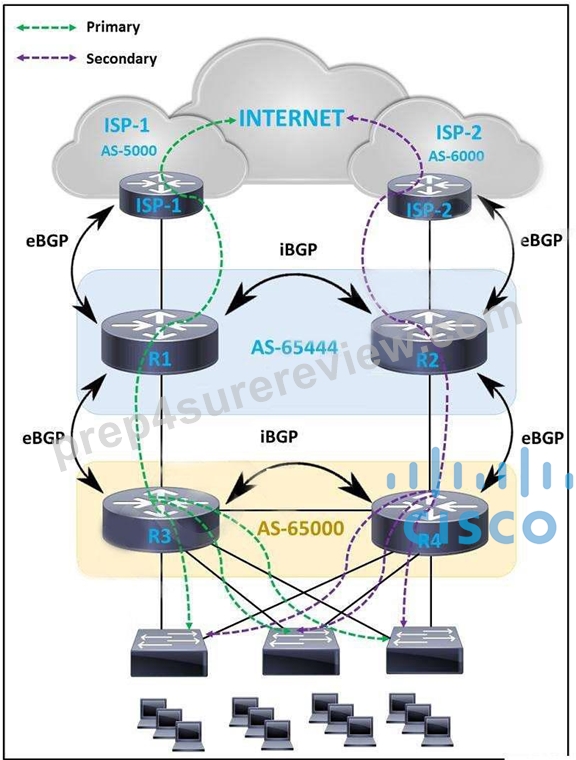
An engineer must design a WAN solution so that ISP-1 is always preferred over ISP-2. The path via ISP-2 is considered as a backup and must be used only when the path to ISP-1 is down. Which solution must the engineer choose?
- A. R1:
- Routes advertised to ISP-1: 0x AS-path prepend
- Routes received from ISP-1: LOW local-preference
- Routes advertised to R2: community NO-ADVERTISE
- Routes received from R2: no action
R2:
- Routes advertised to ISP-2: 5x AS-path prepend
- Routes received from ISP-2: HIGH local-preference
- Routes advertised to R1: no action
- Routes received from R1: community NO-ADVERTISE - B. R1:
- Routes advertised to ISP-1: 0x AS-path prepend
- Routes received from ISP-1: HIGH local-preference
- Routes advertised to R2: no action
- Routes received from R2: community NO-EXPORT
R2:
- Routes advertised to ISP-2:5x AS-path prepend
- Routes received from ISP-2: LOW local-preference
- Routes advertised to R1: community NO-ADVERTISE
- Routes received from R1: no action - C. R1:
- Routes advertised to ISP-1: 0x AS-path prepend
- Routes received from ISP-1: HIGH local-preference
- Routes advertised to R2: community NO-EXPORT
- Routes received from R2: no action
R2:
- Routes advertised to ISP-2: 5x AS-path prepend
- Routes received from ISP-2: LOW local-preference
- Routes advertised to R1: no action
- Routes received from R1: no action - D. R1:
- Routes advertised to ISP-1: 5x AS-path prepend
- Routes received from ISP-1: LOW local-preference
- Routes advertised to R2: community NO-ADVERTISE
- Routes received from R2: no action
R2:
- Routes advertised to ISP-2: 0x AS-path prepend
- Routes received from ISP-2: HIGH local-preference
- Routes advertised to R1: community NO-EXPORT
- Routes received from R1: no action
Answer: C
NEW QUESTION # 150
An architect is designing a network for an enterprise site. The design must use an active/backup design for the WAN. It must guarantee the SLA for several applications regardless of which connection is used. Which deployment model should the architect choose?
- A. internet WAN from two separate ISPs
- B. hybrid WAN using MPLS VPN and internet VPN from a single ISP
- C. MPLS WAN from two separate ISPs
- D. hybrid WAN using MPLS VPN and internet VPN from two separate ISPs
Answer: C
NEW QUESTION # 151
Drag and drop the elements from the left onto the functions they perform in the Cisco SD-WAN architecture on the right.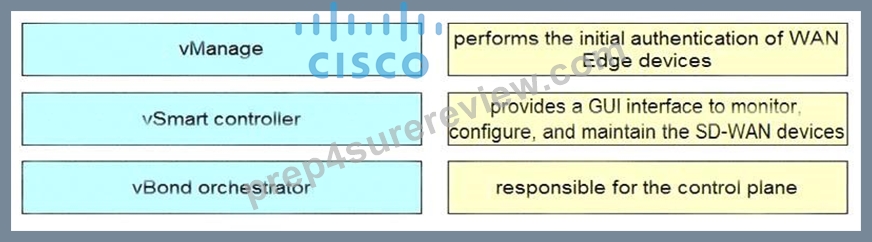
Answer:
Explanation: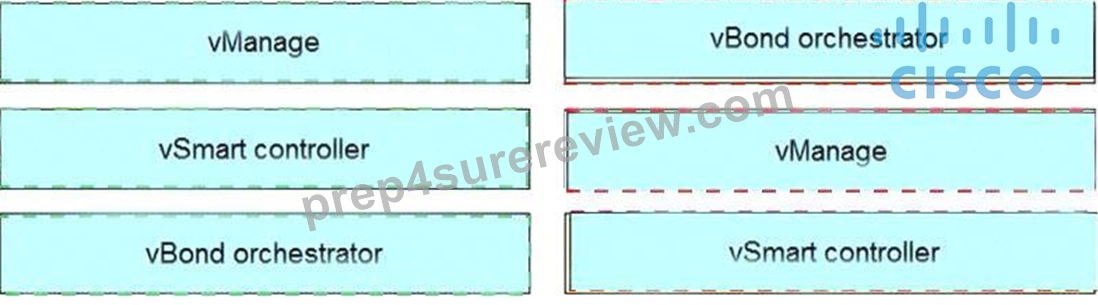
Explanation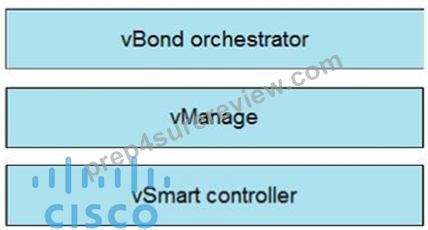
Table Description automatically generated
NEW QUESTION # 152
Drag and drop the characteristics from the left onto the YANG models they describe on the right. Not all options are used.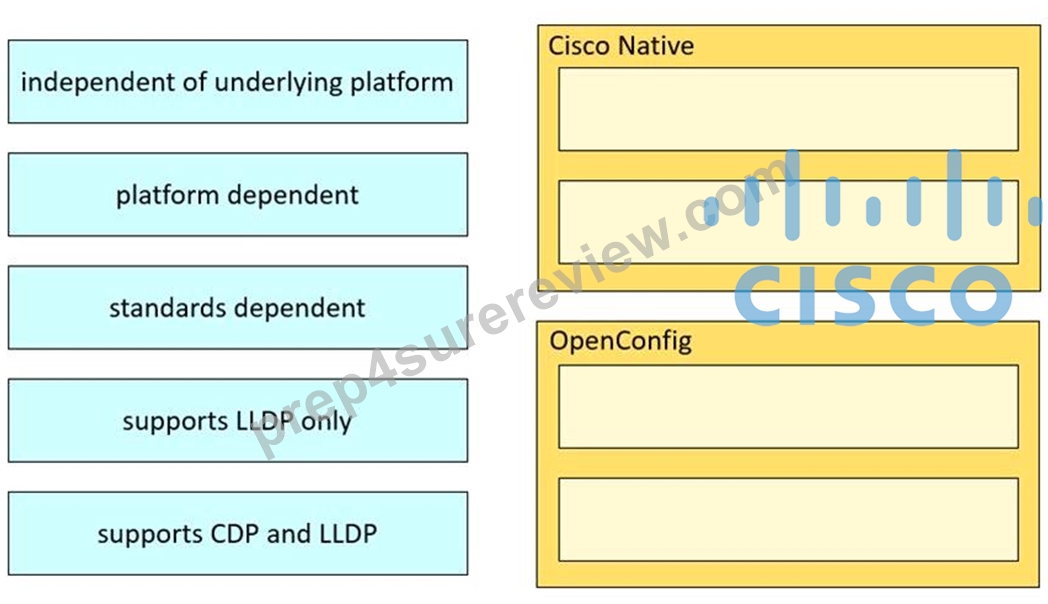
Answer:
Explanation: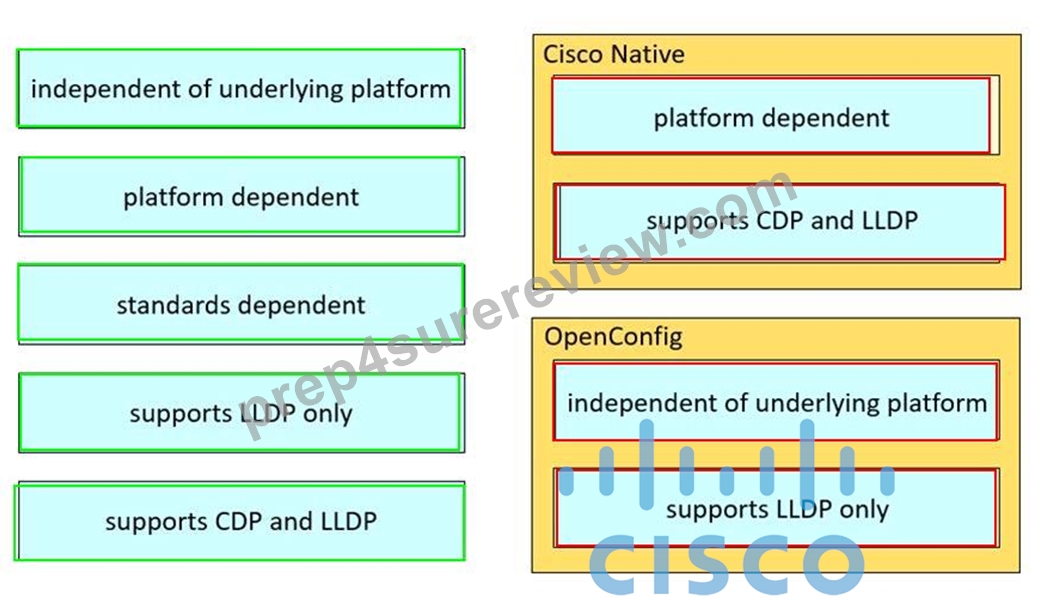
NEW QUESTION # 153
The customer solution requires QoS to support streaming multimedia over a WAN. An architect chooses to use Per-Hop Behavior.
Which solution should the engineer use to of mark traffic traveling between branch sites?
- A. LLQ with DSCP AF4
- B. CBWFQ with DSCP AF2
- C. LLQ with DSCP EF
- D. CBWFQ with DSCP AF3
Answer: D
Explanation:
LLQ with EF seems way too strict for STREAMING multimedia (where one can actually take advantage of buffering).
Judging by the various Cisco QoS baseline docs (even though the ones below are quite old), streaming video should be somewhere at AF3x/CS4.
https://www.cisco.com/en/US/technologies/tk543/tk759/technologies_white_paper0900aecd8029
5a9b.pdf
https://community.cisco.com/t5/collaboration-voice-and-video/cisco-qos-baseline-classification- and-marking-and-mapping/ta-p/3108355
NEW QUESTION # 154 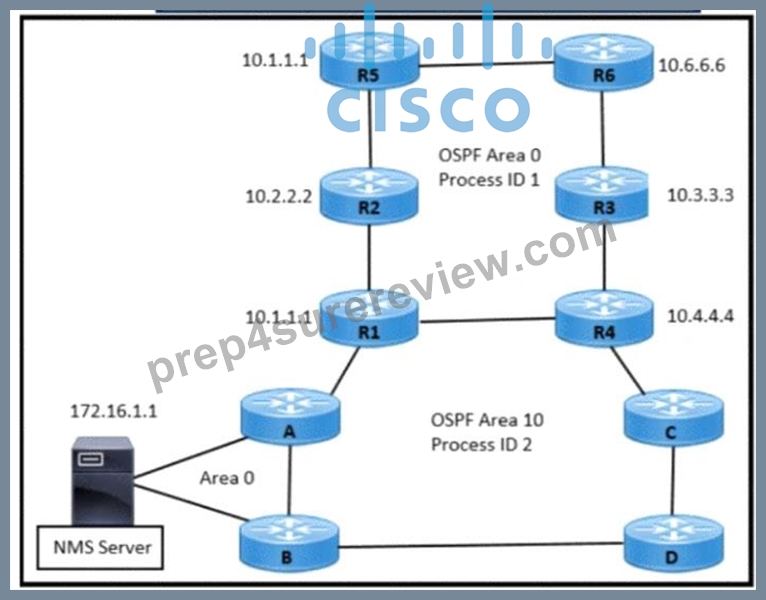
Refer to the exhibit An engineer is designing an OSPF solution with these requirements:
* NMS server will manage R5 and R6.
* Upon failure of R1. all NMS traffic should be routed through R4.
* Upon failure of the link between R5 and R6. all traffic destined for 10.6.6.6 should be routed through R4 Which solution must the engineer choose?
- A. Redistribute OSPF process 1 into process 2 on R1 and R4.
- B. Enable the default-Information originate command with a higher metric on R2 to R1.
- C. Apply static routes on R2 and R3 with IP SLA tracking toward R5 and R6.
- D. Advertise 172.16.1.1 into OSPF process 1 with high cost on R1.
Answer: A
NEW QUESTION # 155
An engineer is designing an IPv4 addressing plan for an enterprise with 1000 branches. Each branch requires a prefix for data and a prefix for voice. Each prefix must accommodate up to 128 hosts, and prefixes must facilitate summarization at aggregation points in the network. The security team requires a simple method for identifying voce prefixes. Which allocation does the engineer recommend from the RFC1918 address space?
- A. /25 prefixes for data from 10.0.0.0/8 end /25 prefixes for voice from the next contiguous /25 prefix per branch
- B. /24 prefixes for data from 10.0.0.0/15 and /24 prefixes for voice from 172.16.0.0/15
- C. /24 prefixes for data from 10.0.0.0/8 and /24 prefixes for voice from the next contiguous /24 prefix per site
- D. /24 prefixes for data from 10.0.0.0/8 and /24 prefixes for voice from 172.16.0.0/12
Answer: C
Explanation:
Explanation
For example:
Site 0001
Data:10.0.0.0/24
Voice: 10.0.1.0/24
summary route : 10.0.0.0/23
Site 0002
Data:10.0.2.0/24
Voice: 10.0.3.0/24
summary route: 10.0.2.0/23
cont...
site 0129
Data:10.1.0.0/24
Voice: 10.1.1.0/24
summary route: 10.1.0.0/23
site 0130
Data:10.1.2.0/24
Voice: 10.1.3.0/24
summary route: 10.1.2.0/23
so 3rd octet is odd number assigned to voice, and even number assigned to data; for security team to recongize voice prefix, use an ACL with wildcast to filter odd number on third octet, started from 10.0.1.0 0.0.254.255, 10.1.1.0 0.0.254.255......, 10.1.1.0 0.0.254.255 etc; for 10.0.1.0 0.0.254.255, any IP in binary that started with 00001010.00000000.xxxxxxx1.xxxxxxxx will be matched (x = either 0 or 1), covert 3rd octet into dec, for example, 10000001 = 129 which is a voice VLAN.
NEW QUESTION # 156
An architect must create a QoS solution for a customer to ensure that a 40 Mbps Internet connection is shared between four subnets based on these requirements:
* Each subnet must receive no less than 10 Mbps of download bandwidth during peak traffic times.
* A subnet can use up to 40 Mbps during nonpeak traffic times if the other subnets are idle.
* Download traffic must never experience a delay.
Which solution must the architect choose?
- A. bandwidth percentage and policing
- B. rate-limiting and shaping
- C. bandwidth percentage and rate-limiting
- D. shaping and policing
Answer: C
Explanation:
Selected answer: B
"Download traffic must never experience a delay."
This means we shouldn't be using Shaping at any point (since that puts packets into a buffer and sends them out later on when congestion has been reduced) Also: "Rate-limiting" is a bigger term and under it we have 2 things: "Policing" and "Shaping"
NEW QUESTION # 157
What are two purposes of the RPF check in multicast routing? (Choose two.)
- A. to ensure that multicast packets are dropped if they arrived on the interface used to route traffic back to the source address
- B. to ensure that multicast packets are forwarded if they arrived on the interface used to route traffic to the destination address
- C. to ensure that multicast packets are forwarded if they arrived on the interface used to route traffic back to the source address
- D. to ensure that multicast packets, no matter the interface they arrived on are forwarded out all interfaces
- E. to ensure that multicast packets are dropped if they arrived on the interface used to route traffic to the destination address
Answer: C,E
NEW QUESTION # 158
Which feature is used to optimize WAN bandwidth of IGMP network traffic among WAN Edge routers in the same VPN?
- A. multicast RP
- B. multicast-replicator
- C. multicast service routes
- D. IGMPv2
Answer: B
Explanation:
https://www.cisco.com/c/en/us/td/docs/routers/sdwan/configuration/bridging-routing- segmentation-qos/vedge/bridging-routing-segmentation-qos-book/multicast-overlay-routing.html Replicators For efficient use of WAN bandwidth, strategic vEdge routers can be deployed and configured as replicators throughout the overlay network. Replicators mitigate the requirement for an ingress router to replicate a multicast stream once for each receiver.
NEW QUESTION # 159
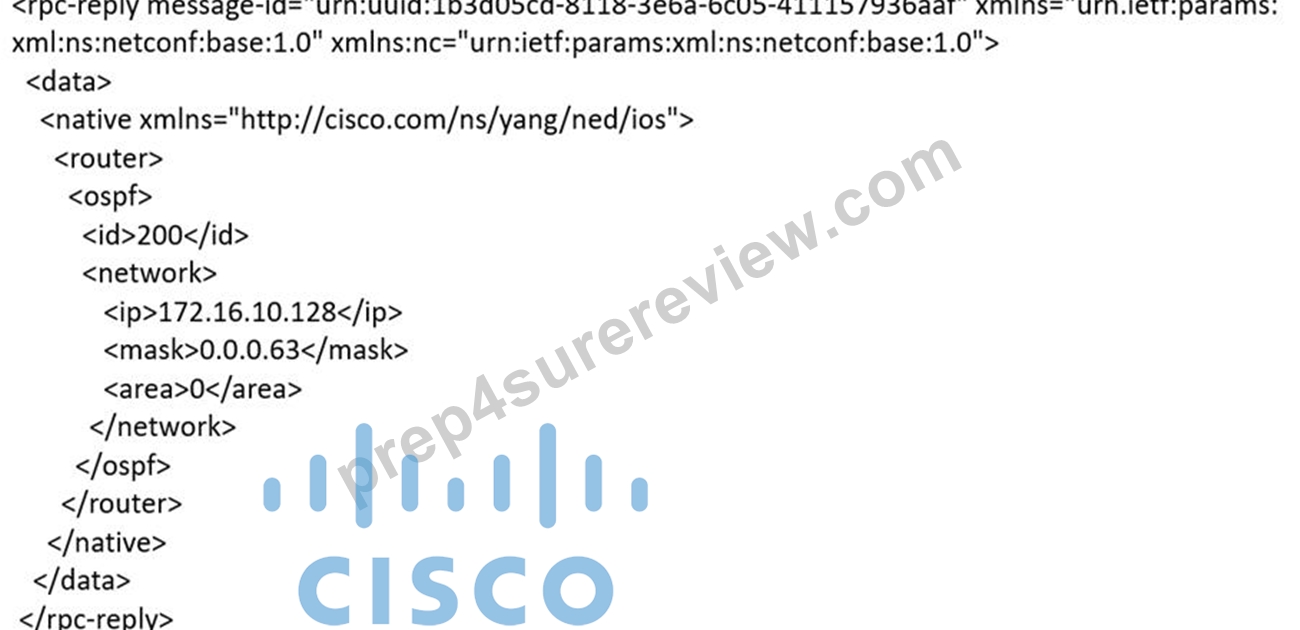
An engineer uses Postman and YANG to configure a router with:
- OSPF process ID 200
- network 172.16.10.128/26 enabled for Area 0
Which get-config reply verifies that the model set was designed correctly?
- A.
- B.
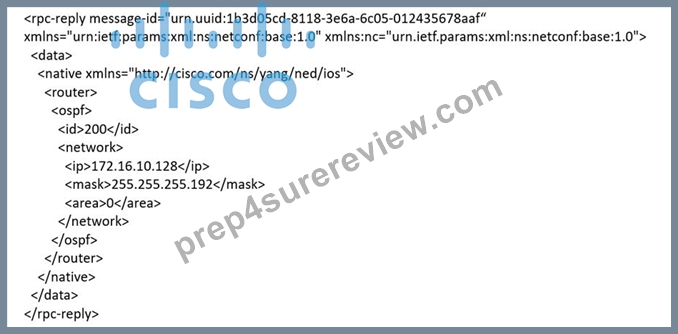
- C.
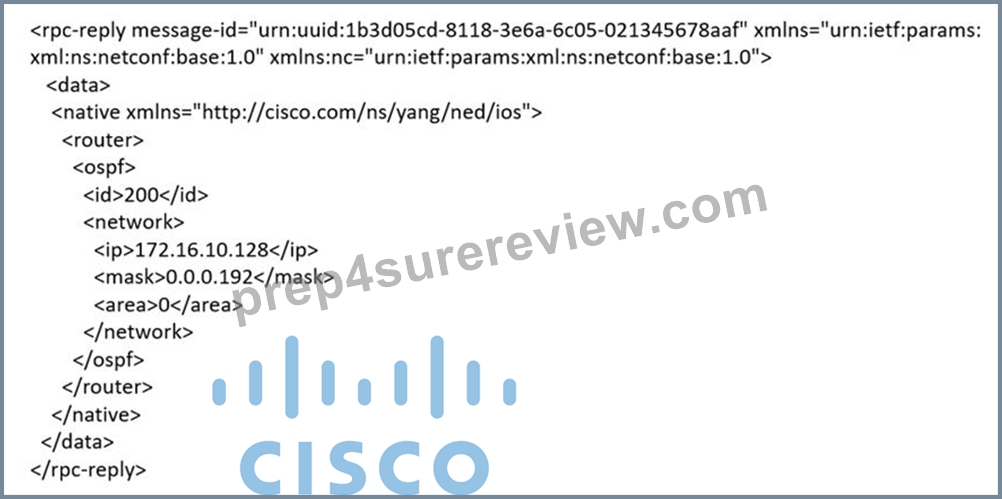
- D.
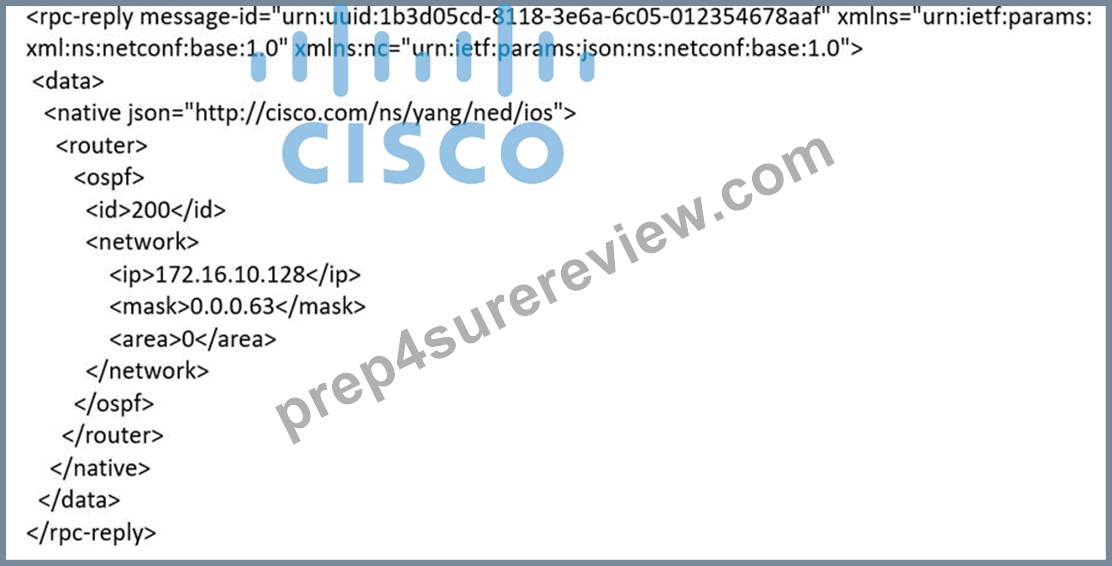
Answer: A
NEW QUESTION # 160
Refer to the exhibit.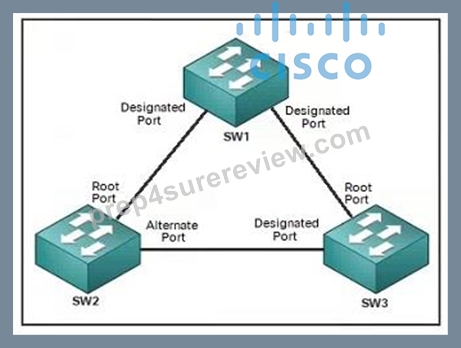
Refer to the exhibit. The connection between SW2 and SW3 is fiber and occasionally experiences unidirectional link failure. An architect must optimize the network to reduce the change of layer2 forwarding loops when the link fails. Which solution should the architect include?
- A. Utilize root guard on SW1.
- B. Utilize BPDU guard on SW1
- C. Utilize 8PDU filter on SW3.
- D. Utilize loop guard on SW2
Answer: D
NEW QUESTION # 161
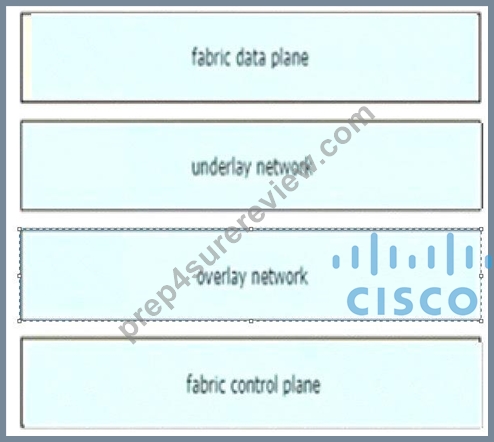
Drag and drop the components in a Cisco SD-Access architecture from the left onto their descriptions on the right.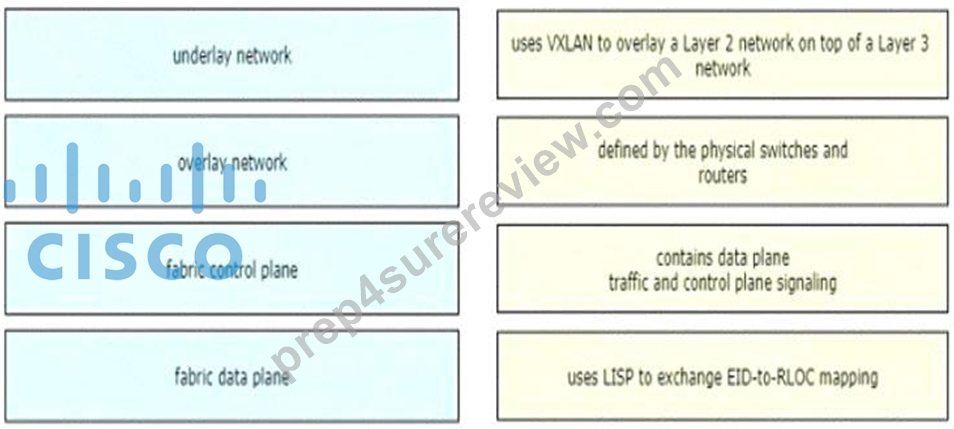
Answer:
Explanation: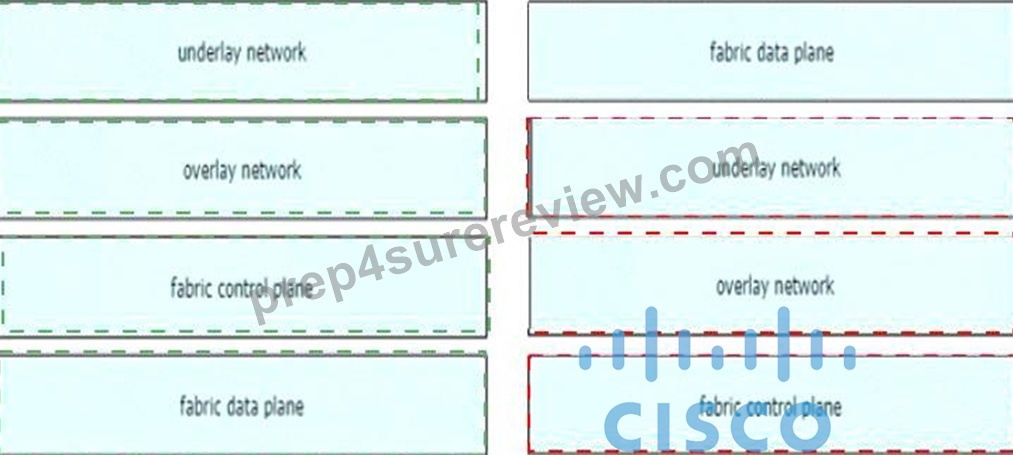
NEW QUESTION # 162
Which feature is used to optimize WAN bandwidth of IGMP network traffic among WAN Edge routers in the same VPN?
- A. multicast RP
- B. IGMPv2
- C. multicast-replicator
- D. multicast service routes
Answer: B
NEW QUESTION # 163
......
Cisco 300-420 exam is a part of the Cisco Certified Network Professional (CCNP) Enterprise certification track. Designing Cisco Enterprise Networks certification track is designed to validate your skills in enterprise networking solutions, including routing, switching, wireless, and security technologies. The CCNP Enterprise certification is a globally recognized certification that demonstrates your expertise in enterprise-level networking solutions.
Cisco 300-420 exam, also known as Designing Cisco Enterprise Networks (ENSLD), is a certification exam that validates the knowledge and skills required for designing enterprise networks. 300-420 exam is designed for network professionals who want to demonstrate their expertise in designing scalable, secure, and robust enterprise networks using Cisco technologies. The 300-420 exam is one of the core exams required for the Cisco Certified Network Professional (CCNP) Enterprise certification.
Get Ready with 300-420 Exam Dumps (2025): https://www.prep4surereview.com/300-420-latest-braindumps.html
Realistic 300-420 Dumps are Available for Instant Access: https://drive.google.com/open?id=18wWGmblI1akvUvA7eNIHpxhCtivEd31T
